How to Wash Dog Toys: A Comprehensive Cleaning Guide

How to Wash Dog Toys: A Comprehensive Cleaning Guide
Between spending time in your dog’s mouth and being tossed around outside, your dog’s toys carry around a lot of dirt and bacteria.
With all these germs and dirt, cleaning dog toys is essential. Below, we’re sharing more about why it’s so important to keep dog toys clean as well as share tips on how to wash dog toys.
Why Cleaning Dog Toys is Essential: Benefits and Best Practices for Safe Play
If you’ve chosen well, your dog probably loves their toys and spends a good amount of their time playing with them. Here’s why cleaning dog toys is essential:
Common triggers include:
Health Risks of Dirty Toys
After you’ve had your hands all over their toys that dirt and bacteria can spread. Soft, plush toys can make excellent breeding grounds for bacteria, fungi, and mold if they’re not cleaned regularly.
Benefits of Regular Cleaning
Cleaning dog toys regularly essential for not only keeping them slobber-free but also germ-free. By frequently cleaning your furry friends’ toys, you can help keep exposure to bacteria low and keep their toys from becoming infested with mold and fungi.
How Often Should You Clean Dog Toys?
How often to wash your dog toys can range from the level of use as well as the types of dog toys. Here are some helpful cleaning tips:
General Cleaning Schedule
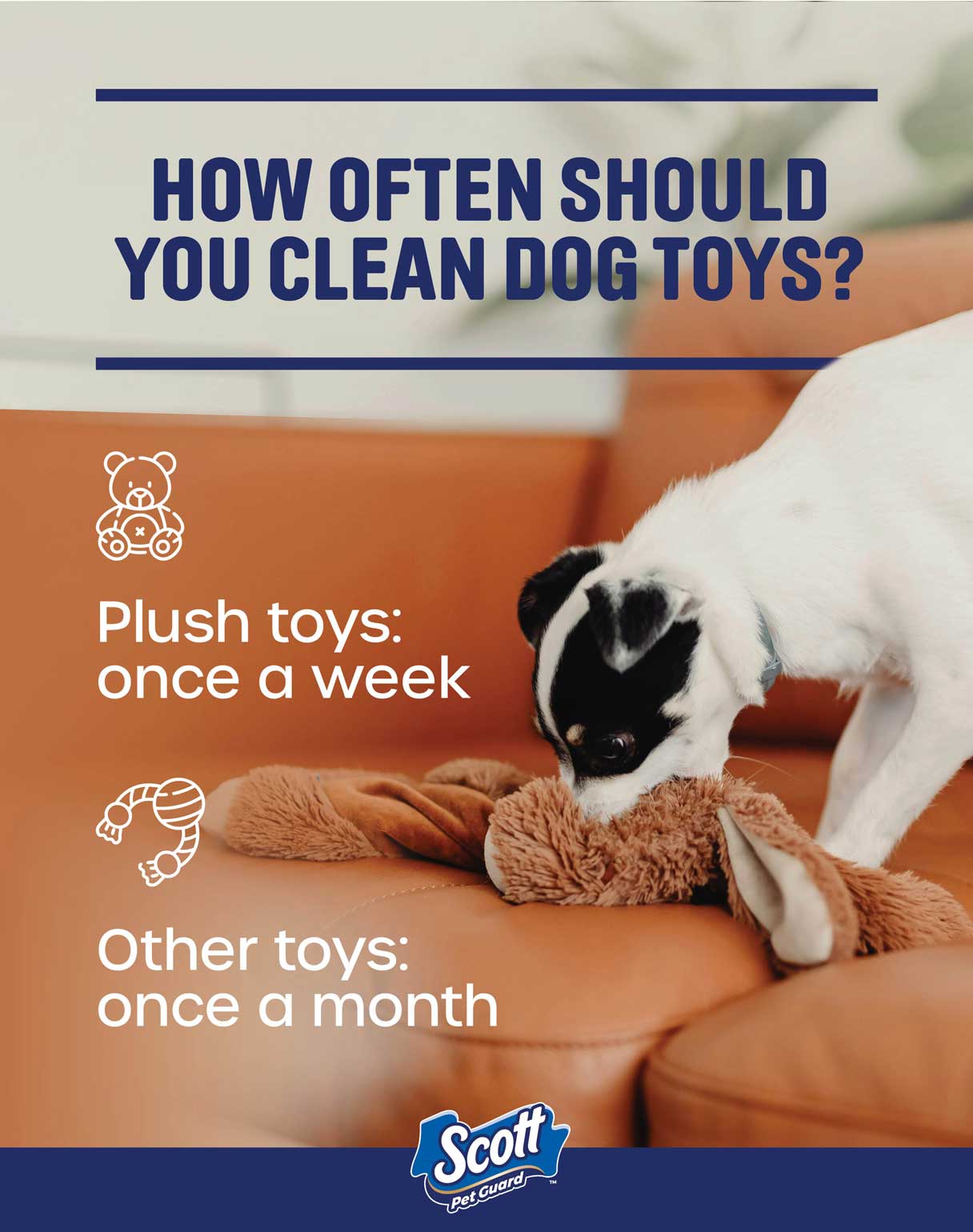
When deciding on your schedule for cleaning dog toys, a good rule of thumb is to clean them at least once a month.
In some cases, like with plush toys, you might want to wash them once a week, especially if they’re regularly being exposed to slobber and other moisture. This way, you can avoid them becoming hubs for bacteria and mold.
High-Risk Scenarios Requiring Daily Cleaning
This might seem strange, but your dog’s diet plays a role in your cleaning schedule. If your dog eats a raw diet, then cleaning and disinfecting their toys every day is crucial.
Meals that contain raw meat or eggs likely also contains bacteria that can be harmful to you and your family. If your dog is playing with their toys directly after finishing their food (and you’re touching these toys), there’s a chance you could be picking up harmful bacteria.
Step-by-Step Cleaning Methods by Toy Type
Our step-by-step guide will make sure you’re using the best methods when cleaning dog toys. When you’re cleaning your pets’ toys, avoid using detergents with these ingredients as they can be harmful since your pet might ingest them when playing with their toys.
- Chlorine
- Sodium lauryl ether sulphate (SLES)
- Bleach
- Phthalates
Cleaning Plush/Stuffed Toys
- Remove any excess dirt or mud. You can do this by brushing it off with a toothbrush.
- Most of the time, your pets' stuffed toys can be tossed in the washing machine. You might also want to consider using a laundry bag, as it’ll allow the toy to be washed gently.
- Be careful when washing toys with plastic bits, glue, and metal that could come off. Using a laundry bag is a great way to manage this.
- Wash the toys in hot water to kill bacteria and viruses.
- If you are washing toys that have plastic bits, metal, or glue, sanitize them first. Follow this up with a cooler wash to avoid melting.
- Once they’re completely cleaned, gently wring them out and pat them dry with some Scott® Paper Towels, offering a trusted combination of value, strength, and absorbency.
- Let them air dry or tumble dry on a low heat setting.
Cleaning Rubber/Plastic/Nylon Toys
To wash rubber, nylon, or plastic toys, you’ll want to make sure you use a pet-safe detergent. There are two ways you can clean these kinds of toys: in the dishwasher or by hand. While most of these toys are dishwasher safe, please make sure to read the label and manufacturer's instructions first.
It’s important, as some of the toys might contain harmful chemicals that can be released in the dishwasher.
Dishwasher method:- Remove any excess dirt with some Scott® Paper Towels . Tape over holes after cleaning them so that detergent doesn’t get inside the toy.
- Wash them in your dishwasher with pet-safe detergent for one cycle.
- Once they’re done, thoroughly rinse them with clean water and dry them.
- If you don’t have a dishwasher or prefer to wash the toys by hand, we have an easy method for you. All you need is pet-friendly antibacterial soap, but if you don’t have any, pure castile soap or unscented Dawn soap will do just fine.
- Using a scrub brush, clean the toys in hot water in your sink.
- Next, give the toys a 30-minute soak in a solution of 5% vinegar and 95% water. If you need a strong solution, you can also do equal parts of vinegar and water.
- After the soak, rinse the toys thoroughly and let them air dry completely.
Cleaning Rope Toys
Rope toys can usually be cleaned the same way that stuffed toys are cleaned, as long as they’re free of plastic and metal.
- Start by cleaning off any excess dirt or mud.
- Then toss them in the washing machine if they’re free of plastic or metal parts and clean them with a pet-friendly soap.
- Once clean, wring it out, pat it dry with some Scott® Paper Towels, and let it air dry.
Disinfecting After Illness (Parvo/Ringworm)
Unfortunately, your pet isn’t invulnerable to sickness. Ringworm is a contagious fungal infection that your dog can pick up and spread to you or your other pets. Once your pup has been diagnosed and treated, there are a few things you want to do to clean toys.
To keep your home fungus-free, make sure you wash any soft toys as previously instructed regularly. For hard toys, you’ll want to disinfect them with the hydrogen peroxide solution below. For both kinds of toys, the key is to wash them regularly and make sure they’re completely dry after.
If your dog has been diagnosed with Parvovirus, cleaning their toys with bleach becomes essential. Because the virus is highly contagious, it’s best to clean all toys with a 1:30 ratio solution of diluted bleach in water. Let their toys soak for 10 minutes in this solution before thoroughly rinsing and drying.
Natural Cleaning Solutions
If you prefer a natural cleaning solution to store-bought options, we have some homemade recipes that are sure to get your dog’s toys squeaky clean.
Vinegar and Baking Soda Mix
An odor neutralizer, sprinkling your pets’ toys with baking soda will do more than just clean them. Before you throw your dog’s toys in the washing machine, sprinkle them with baking soda and add in a couple of capfuls of vinegar.
Let it go on a normal hot cycle and rinse, making sure to dry them thoroughly.
Soap Nuts for Eco-Friendly Cleaning
Also known as soap berries, soap nuts give you an eco-friendly, biodegradable way to wash your pets’ toys. These organic, non-toxic “nuts” are nature’s soap, working the same way man-made detergents do, lifting dirt from materials.
If you’re using your washing machine to clean your dog’s toys, add the soap nuts to a laundry bag or pillowcase before adding them to the machine. Wash on a warm or hot cycle and watch the magic happen.
Alternatively, you can soak the toys in soap nut water for 30 minutes before rinsing and drying.
Hydrogen Peroxide Disinfection
To fully clean your dog’s toys, you might need to disinfect them; this is where an agent like hydrogen peroxide is helpful. With its antifungal and antibacterial properties, hydrogen peroxide is a great way to thoroughly clean your pups’ toys.
However, it’s important that you properly dilute it when washing the toys to avoid harming your dog. Mix equals parts of 3% hydrogen peroxide with water to disinfect toys and rinse thoroughly after cleaning.
When to Replace Dog Toys
Keep an eye out for these signs that it might be time to replace your dog’s toys.
Visible Signs of Wear and Tear
If your dog has chewed its toys until they’re practically in tatters, frayed, and torn. This is a sign that it’s time for them to be replaced. If not, they could become a choking hazard.
Safety Hazards to Watch For
And if you notice strange growths or smells on their toys, it could indicate a mold problem. Keep an eye out for this, especially if you’re regularly going for walks in moist or wet places or your dog often chews their toys.
Discover Pet Care Wipes with Scott®
Just back from the park? Wipe down toys instantly with Scott® Dog Wipes to remove dirt and saliva before bacteria build up.